Optimization of a cogeneration plant
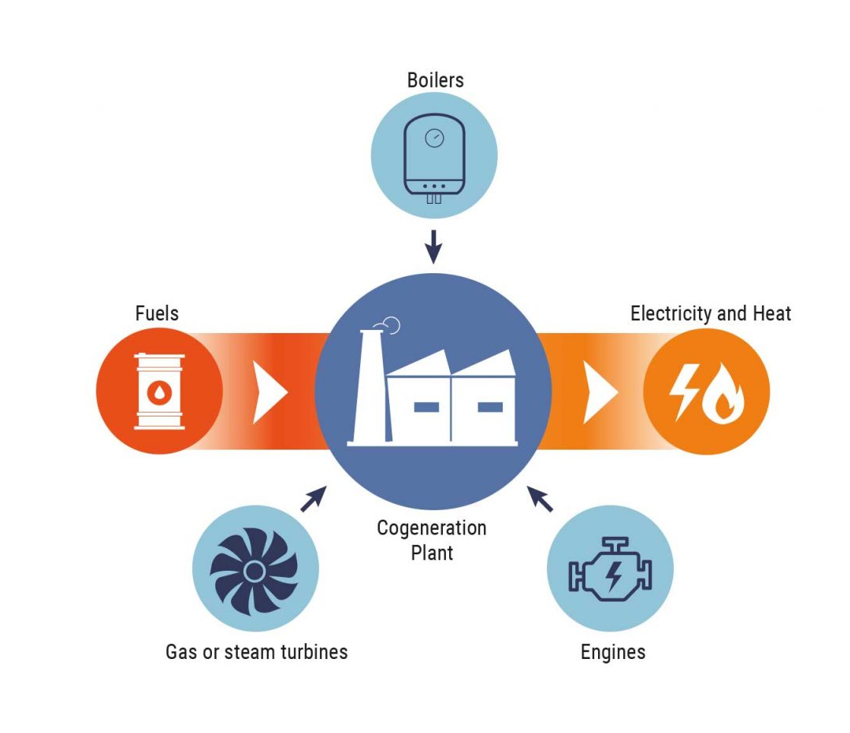
Cogeneration is the process of simultaneously producing electricity and heat through the simultaneous use of turbines, engines, boilers or other instruments. The energy and heat generated can be used for heating buildings and/or for industrial production processes.
Below is a diagram that illustrates the operating principle of a cogeneration plant.
Some examples of application of the cogeneration process: power plants, refineries, chemical, food, pharmaceutical companies, incinerators, paper mills, sugar factories, sawmills, plants powered by peat and wood waste.
How to optimize a cogeneration plant
To maximize the performance of cogeneration plants it is naturally essential to monitor fuel consumption, combustion efficiency and the level of emissions.
These checks are also fundamental for the maintenance and safety of the system and can be carried out with analyzers that allow the temperature of the gases and their concentrations to be verified. In particular, the gases involved are O2, CO and CO2, CxHy, total NOx (NO+NO2), SO2, H2S.
Seitron's solution
The solution proposed by Seitron is Chemist 900, capable of carrying out accurate measurements of the gases under examination and supplied with dedicated software for data recording and analysis .