Carbon monoxide: what it is and how it is generated
In a previous post we talked about the difference between carbon monoxide and carbon dioxide, but almost certainly each of us has heard of CO at least once in relation to some news story. In fact, carbon monoxide has a terrible reputation as a killer gas , often unfortunately underestimated. Let's see together how it is formed and what the most dangerous sources are in everyday life.
What is carbon monoxide
Let's start from the beginning, that is, answering the question of what carbon monoxide is. This gas, also known as carbon monoxide, is the product of a combustion reaction in lack of air. The formula for carbon monoxide, CO, is one oxygen and one carbon atom linked by a triple bond .
This is a poisonous gas particularly insidious as it is odorless, tasteless, colorless and non-irritating, which without adequate ventilation can quickly reach high concentrations. Precisely these characteristics mean that it can be inhaled without realizing it until be lethal .

Carbon monoxide, where is it found?
Some common places where carbon monoxide can be found are as follows:
- Vehicles : Internal combustion vehicles emit carbon monoxide as a product of fuel combustion. It is important not to operate a vehicle in a closed garage or poorly ventilated area.
- Workplaces : In some occupations, such as manufacturing or chemical processing, there may be a risk of exposure to carbon monoxide due to combustion processes or other industrial activities.
- Outdoors : Carbon monoxide can also be present outdoors in areas with a high density of vehicular traffic or near fires.
Finally, we should not forget the carbon monoxide in the home . Sources of CO inside homes include gas stoves, wood stoves, fireplaces, furnaces, oil heaters, and vehicles left in locked garages next to the home.
How carbon monoxide is formed
It is therefore very important to understand how CO is formed and what its characteristics are. When, in the presence of combustion of organic material (coal, oil, wood, etc.), the oxygen present in the air is not sufficient to convert all the carbon into carbon dioxide (CO2), monoxide is formed. Some examples in nature are forest and forest fires, or volcanic activity.
What produces carbon monoxide indoors?
But how does CO production occur in closed environments? In fact, it is precisely inside homes that this gas exposes us to the greatest health risks. In homes under normal conditions, levels are between 1.5 and 4.5 mg/m 3 , but in the presence of combustion processes and inadequate ventilation concentrations can reach levels of up to 60 mg/m 3 .
So what are the most dangerous sources of monoxide in the home?
The causes of formation and escape of carbon monoxide in the home can be the most varied and are most often linked to misinformation, carelessness or non-compliant systems.
Some examples are tobacco smoke, boiler malfunction o gas water heaters , obstructions of flues and chimneys which prevent the correct evacuation of fumes from chimneys, wood or gas stoves . Other sources may be the internal use of devices designed for outdoors, such as camping stoves .
It is important to underline that CO is not present in the methane gas that normally fuels hobs of kitchens. In the case of leakage without combustion from the stove we are therefore in the presence of a methane leak and not carbon monoxide .
How to protect yourself from carbon monoxide leaks
Precisely due to the subtle nature of carbon monoxide, it is essential to adopt behaviors that prevent the problem such as providing regular maintenance of the heating system and leaving the air vents free to guarantee adequate ventilation of the rooms .
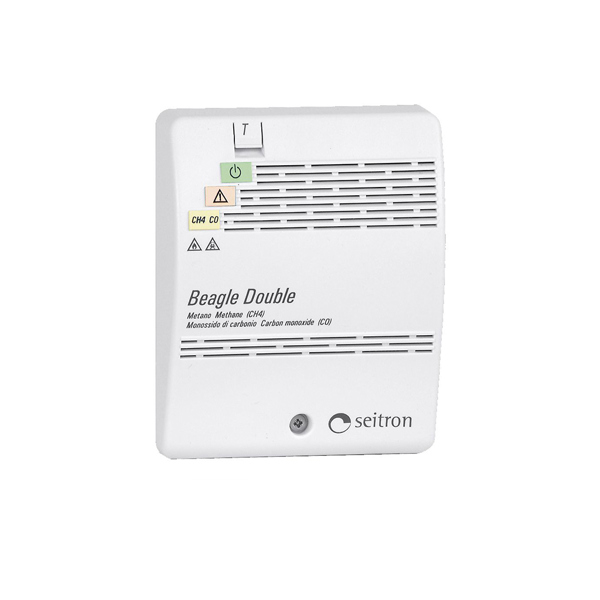
To these prevention rules which should never be overlooked, a further level of protection can be added which consists in the installation of a gas detector which can alert us to the possible presence of CO .
If you are interested in learning more about health risks and how to prevent monoxide poisoning, you can read the dedicated article: Carbon monoxide: prevention and risks .